
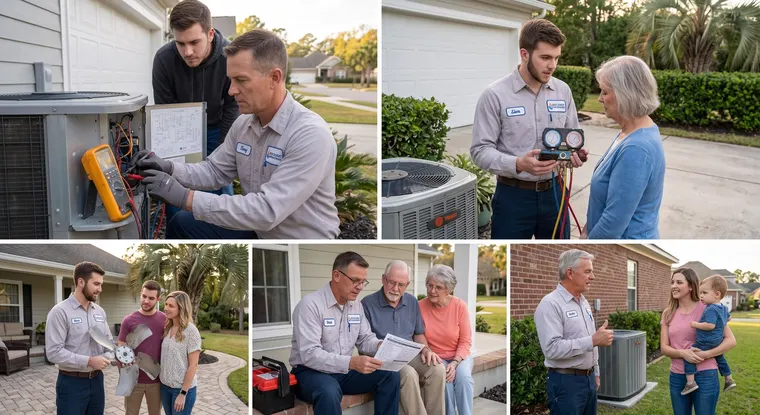
When a furnace dies on a cold night or an AC quits in the middle of a heat wave, a homeowner does not carefully compare five contractors over a week. They search, tap a result, and call. If nobody answers, they tap the next one. The company that responds first, and sounds like it can help, usually wins the job.
This is what people mean by “speed to lead,” and it is one of the biggest advantages a small HVAC shop can build. You may not have the biggest ad budget in your market, but you can be the fastest to respond. That is a competitive edge no national brand can easily copy.
Why Speed Matters So Much in HVAC
HVAC is a high-urgency business. Unlike a kitchen remodel, where a homeowner may take weeks to choose a contractor, a no-cooling or no-heat call often has a clock on it. People are uncomfortable, worried about kids, pets, or elderly relatives, and want a clear answer to a simple question: when can someone get here?
Even for non-emergency work such as quotes on a replacement system, a quick response signals professionalism. A homeowner who submits a form and hears back in minutes assumes you will be just as responsive on the job. One who waits until tomorrow assumes the opposite.
We cannot give you a universal statistic for how fast is fast enough, because it varies by market and season. But the pattern is consistent: the longer a lead waits, the more likely they have already booked someone else.
Where Response Time Breaks Down
For a small contractor, slow response is rarely about laziness. It is about the reality of the job.
- Everyone is in the field. The owner is under a unit, the tech is on a roof, and the office, if there is one, is a single person on another call.
- Evenings and weekends. Many urgent calls come outside normal hours. We cover this in detail in our article on after-hours HVAC calls.
- Form leads sit in an inbox. A website form submission at 2 p.m. may not get noticed until 6.
- Callbacks get forgotten. A voicemail gets a “I will call them back after this job,” and then the day takes over.
Each of these is a small leak. Together, they can swallow a meaningful portion of the leads you paid to generate. For a fuller picture, see where HVAC leads get lost.
The Real Cost of a Slow Response
Consider a shop that spends a few thousand dollars a month on advertising and receives a healthy stream of calls. Suppose even a handful of those calls each month go unanswered or are returned too late. If just two of those would have become $500 repair jobs, that is $1,000 gone. If one would have become a system replacement, the loss is far larger.
Now multiply that over a year. The money you lose is not just the missed jobs. It is the ad spend that generated those leads, plus the lifetime value of a customer who might have called you for maintenance and future repairs.
Build a Response System, Not a Heroic Effort
You cannot fix speed to lead by telling yourself to check your phone more often. You need a system that works when you are busy.
A solid response system for a small HVAC company has four parts.
1. Every call gets answered
The foundation is simple: a live voice, or something that functions like one, picks up every call. Gracie, the AI receptionist, answers 24/7 or on the schedule you choose. She gathers the caller’s name, phone number, address, HVAC problem, and urgency, and can transfer the call to you or text the details to the owner or a technician.
This means the caller is never greeted by a ringing phone or a voicemail box. They are talking to someone who is already starting to help.
2. Urgent calls reach a human immediately
Not every call is an emergency, and not every call needs to interrupt you. A good system sorts them. A no-heat call with an elderly resident at home should go straight to whoever is on call. A request for a maintenance quote can wait for a text summary and a callback within the hour.
Setting these rules in advance removes the guesswork when you are busy.
3. Automatic follow-up when a transfer fails
What happens if Gracie tries to transfer a call and nobody picks up? Without a backup, the caller is left hanging. With AI chatbot and SMS follow-up, the lead gets an immediate text confirming that their request was received and that someone will respond. This keeps the conversation alive and gives you a chance to book the estimate before they call another company.
4. Everything is recorded
If you cannot see what happened to each lead, you cannot improve. LeadTable tracking records leads, call details, outcomes, sources, and follow-up status in one place. You can see which leads were answered, which were booked, and which were never followed up, so nothing quietly disappears.
Speed Also Applies to Online Leads
Phone calls are only part of the picture. Many homeowners prefer to submit a form or use a website chat, especially when researching replacements. These leads often come from paid campaigns, which means you paid for each one.
Treat a form submission like a ringing phone. Send an automatic text acknowledging the request within moments, then follow up with a human response. A quick “Thanks, we received your request and will call you shortly” makes the lead feel attended to, even if the full call happens a little later.
This is also where the quality of the landing page matters. A focused landing page with a short form makes it easier for the homeowner to act and easier for your system to respond.
Speed Is a Trust Signal
Responding fast does not just win the immediate job. It shapes how customers see your company. A prompt response says you are organized, reliable, and respectful of their time.
That impression carries into reviews. Homeowners who feel taken care of are more likely to mention responsiveness in their feedback, and review text like that helps future customers choose you. Our reviews and follow-up service builds on this by making it easy to ask satisfied customers for reviews at the right moment.
A Simple Self-Audit
You can test your own speed to lead this week. Try these steps:
- Call your own business at 8 p.m. on a weeknight and see what happens.
- Call at midday while your techs are in the field. Does anyone answer?
- Submit your own contact form and time how long it takes to get a response.
- Review your last 20 missed calls. How many were returned, and how quickly?
- Check your records. Can you tell how many leads from last month became booked jobs?
If the results are uncomfortable, that is useful information. It means there is revenue sitting on the table that you can recover without buying a single additional click.
Small Shops Can Be Faster Than Big Ones
Large HVAC companies have call centers, but they also have scripts, hold times, and dispatch queues. A small shop with the right system can respond just as quickly, with a more personal touch. The strongest outcome is a dependable flow: search, call or form, Gracie answers or captures details, immediate transfer or text follow-up, LeadTable tracks it, and the owner knows what produced booked work.
That lets a 1–4 truck company operate with the responsiveness of a much larger shop, without hiring a full-time office person.
Put Speed to Work for Your Shop
MicroManaged Media, Inc. created Get Calls AI to help small HVAC contractors capture more of the calls they already pay for and respond before the competition does. From managed HVAC PPC advertising to Gracie and LeadTable, the system is built for contractors who are busy in the field and cannot afford to miss the phone.
Contact MicroManaged Media today and find out how fast your shop can respond.