






If you run a small HVAC company, you have probably wrestled with the same question: who answers the phone when we cannot? You are on a job. Your techs are on jobs. It is 8:45 on a Saturday night and a homeowner is calling about a dead furnace. Somebody needs to pick up.
For years, the options were limited: hire an office person, pay a live answering service, or let calls go to voicemail and hope. Now there is another choice, an AI receptionist. This article compares the options honestly, so you can choose what fits your shop and budget.
What You Actually Need From Call Handling
Before comparing tools, it helps to define the job. For an HVAC contractor, a good call-handling solution should:
- Answer every call quickly, at any hour you choose
- Gather the right details, including name, phone number, address, the HVAC problem, and urgency
- Route urgent calls to you or a technician right away
- Follow up when a call cannot be connected
- Record what happened, so nothing is lost
- Sound professional and represent your company well
Whichever option you choose, measure it against that list.
Option One: Voicemail
Let us address the baseline. Voicemail is free, and it feels like a reasonable fallback. But for urgent home-service calls, it often fails. A caller with no AC or heat rarely wants to leave a message and wait. Many hang up and call the next company, and the ones who do leave messages may have already called others.
Voicemail does not collect structured details, does not text you, and does not follow up. If you spend money on advertising, sending paid calls to voicemail is one of the most expensive habits a contractor can have. Our guide to after-hours HVAC calls explains why.
Option Two: A Full-Time or Part-Time Receptionist
An in-house person has real strengths. They know your business, build relationships with customers, and can handle scheduling, billing questions, and walk-ins.
But for a 1 to 4 truck company, the drawbacks are real:
- Cost: Wages, payroll taxes, and management time are significant fixed expenses, especially if call volume is uneven.
- Coverage gaps: One person cannot work nights and weekends, and there are sick days and vacations.
- Capacity: If they are on one call, a second caller waits or reaches voicemail.
- Peak season strain: The same person may be overwhelmed during rushes and idle in slow weeks.
For some growing shops, a receptionist makes sense. For many small ones, it is hard to justify full coverage this way.
Option Three: A Traditional Live Answering Service
Live answering services staff operators who answer calls on behalf of many businesses. They can extend your coverage to nights and weekends and may be a step up from voicemail.
Strengths:
- A human voice on the line
- Flexible hours
- No hiring or training on your side
Limitations to check:
- Generic knowledge. Operators handle many industries and may not understand HVAC terms or urgency, so they might not ask the right questions.
- Inconsistent quality. The experience can vary depending on who answers.
- Cost structure. Many charge per minute or per call, so costs can climb during busy periods.
- Message-taking only. Some services take a message and pass it along, with little ability to triage, text, or follow up automatically.
- Limited tracking. Details may arrive as emails or texts that are not connected to your lead records.
A good answering service can work well. Just ask how they handle emergency triage, what information they collect, and how quickly you are notified.
Option Four: An AI Receptionist
An AI receptionist is software that answers calls, converses with callers, and captures information. Done well, it blends the availability of automation with a helpful, structured conversation.
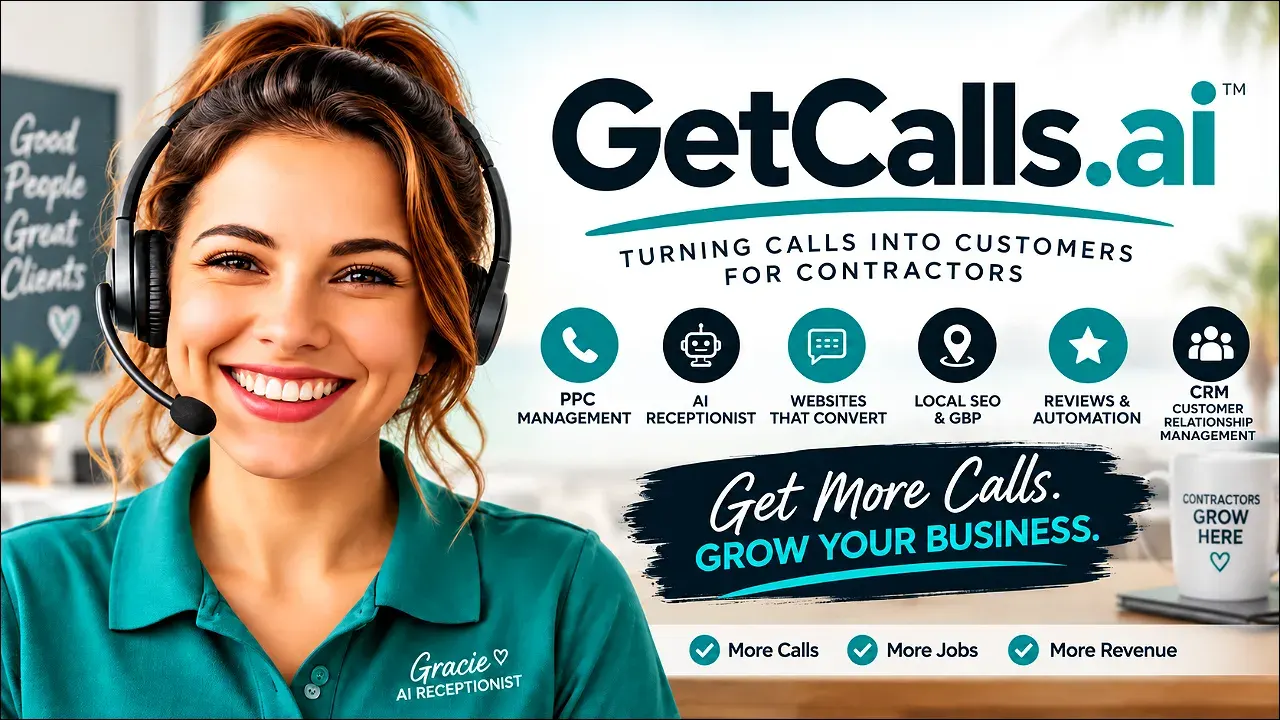
Gracie, the AI receptionist, is built specifically for contractors. She answers calls 24/7 or on the schedule you choose. She gathers the caller’s name, phone number, address, HVAC problem, and urgency, and can transfer the call or text the owner or a technician.
Strengths:
- Always available. She does not take sick days, vacations, or lunch breaks.
- Handles multiple situations. Callers are not left waiting because someone else is on the line.
- Consistent questions. Every caller is asked for the details you need.
- Instant notification. You get a text with the summary, so you can respond quickly.
- Integrated follow-up. If a transfer fails, SMS follow-up keeps the lead warm.
- Connected to tracking. Call details can feed into your records.
Considerations:
- Some callers prefer talking to a person, and you should decide which calls you want routed to a human right away.
- The system needs setup so it reflects your business accurately, including your service area, hours, and escalation rules.
- It should complement, not replace, the personal touch your team provides once a technician is on site.
Comparing the Four Side by Side
Availability. Voicemail is always on but captures little. A receptionist covers business hours. An answering service can extend coverage. An AI receptionist can cover any schedule you set.
Cost predictability. Voicemail is free but costly in lost jobs. A receptionist is a fixed salary. Answering services often vary with call volume. AI receptionist pricing varies by provider, so confirm how it compares to your current costs.
Detail capture. Voicemail relies on the caller. Receptionists and answering services depend on the individual. AI follows a consistent set of questions.
Speed of notification. An AI receptionist can text the owner or technician immediately, shortening the time between the call and your response.
Tracking. Most traditional options leave you to piece together records manually. A connected system keeps everything in one place.
The Financial Case
For many small shops, the real question is not “what does this cost?” but “what does it recover?” The biggest financial leak for a small HVAC company is usually not a shortage of leads. It is paying for leads that are unanswered, handled slowly, forgotten, or never followed up.
A practical example: if Gracie recovers only 4 otherwise-missed calls a month, and just 2 turn into $500 repair jobs, that is $1,000 in extra monthly revenue. One replacement sale can make the system pay for itself many times over. The exact value depends on your close rate, average ticket, and how many calls you currently miss. We walk through this kind of math in where HVAC leads get lost.
For many shops, an AI receptionist can replace many of the after-hours answering service or receptionist tasks, while capturing calls that would otherwise go to voicemail or a competitor.
Do Not Forget What Happens After the Call
Answering is only the first step. Whatever option you choose, you need a way to track what happens next. Did the call become a booked job? Which ad or listing generated it? Is a follow-up still pending?
LeadTable tracking records leads, call details, outcomes, sources, and follow-up status in one place. That means the information Gracie captures flows into a system where you can see which calls became real revenue.
Combine that with managed HVAC PPC ads and focused landing pages, and each part of the system supports the others: ads and pages drive calls, Gracie answers them, and LeadTable shows what worked.
How to Choose
Ask yourself these questions:
- How many calls do I miss each month? If it is only a few and you have a reliable office person, you may not need more.
- Do I get calls at night and on weekends? If so, voicemail is costing you.
- Do I spend on advertising? The more you spend, the more valuable it is to answer every call.
- Can I afford a full-time hire? If not, consider alternatives that scale with your volume.
- Do I want details captured consistently? Structured intake helps your team prepare and respond.
- Do I want everything tracked? Choose a solution that connects to your records.
A Hybrid Approach Often Works Best
You do not have to choose only one. Many shops use an AI receptionist to handle nights, weekends, and overflow, while a part-time office person manages scheduling and customer relationships during the day. Others route only urgent calls to a live person and let the system handle routine inquiries.
The strongest setup is the one that ensures no paid or valuable call goes unanswered, and that your team spends time on the work only people can do.
Let Us Help You Decide
MicroManaged Media, Inc. created Get Calls AI so a 1 to 4 truck HVAC company can respond with the speed and polish of a much larger shop, without adding a full-time office person. With Gracie answering, LeadTable tracking, and review automation building trust, you can capture more of the calls you already pay for.
Contact MicroManaged Media today and let us walk through what the right setup looks like for your shop.